A Surprising Start
“I accidentally got into health care by trying to get out of factory work,” Steve shares. As a maintenance mechanic in a local factory, Steve was searching for better opportunities and a fresh start. What he found was a career in health care facilities — a shift from keeping production lines running to helping keep hospitals safe and functional. It was unexpected, but transformative.
Leading the Charge in Hospital Operations
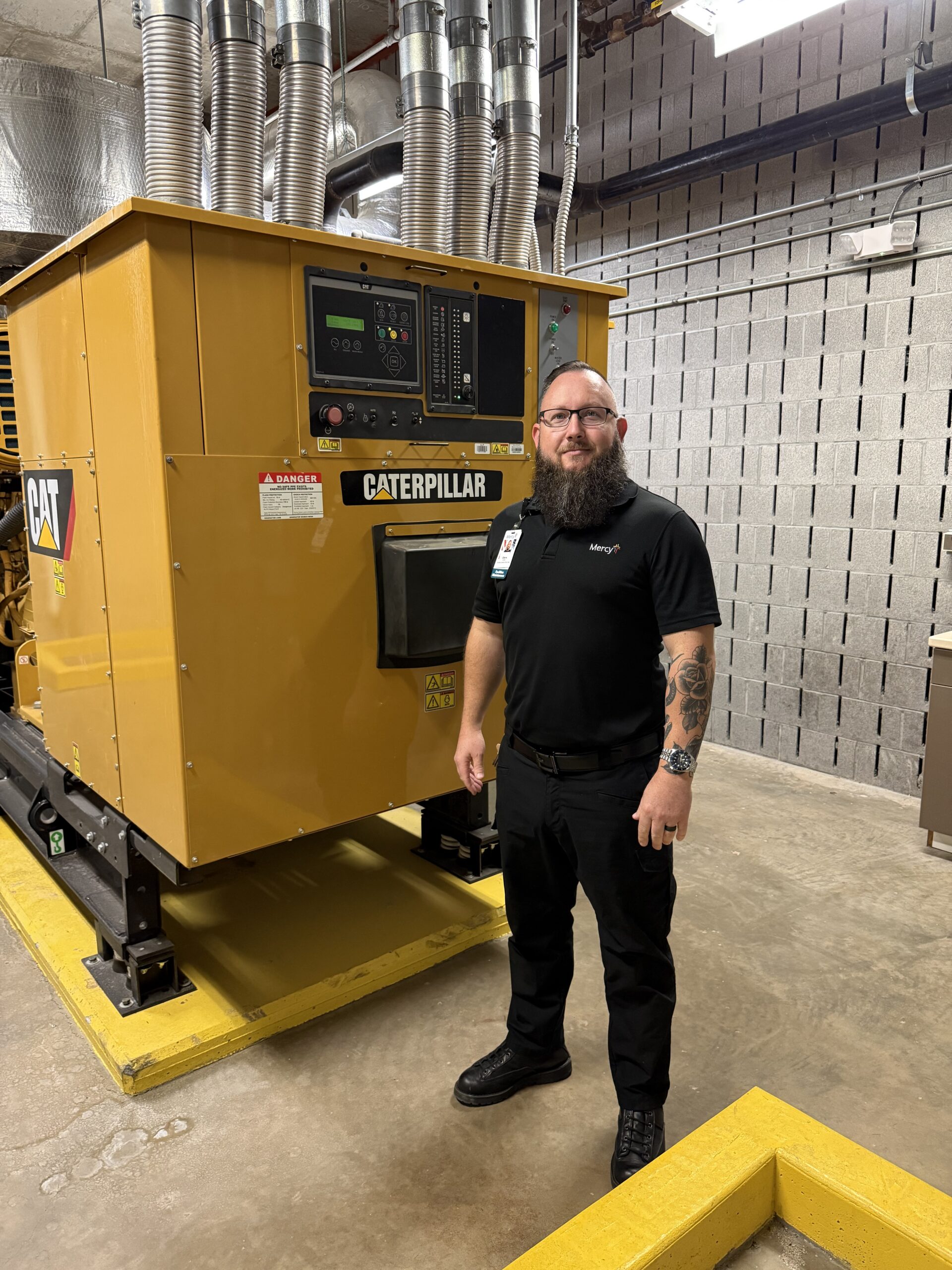
Today, Steve serves as senior manager of facilities maintenance and operations at Mercy, overseeing a 200,000-square-foot orthopedic hospital with a brand-new emergency department opening soon. His role is a blend of leadership, technical expertise and problem-solving.
A typical day includes:
- checking in with the facilities team
- removing roadblocks so technicians can do their jobs
- attending meetings and handling compliance paperwork
- coordinating with vendors and contractors
- supporting technicians with tasks like HVAC maintenance, boiler inspections and wheelchair repairs
Every day is different, and every task contributes to the hospital’s ability to care for patients.
The Heart of the Job: People
What keeps Steve coming back each day? “The people,” he says. “We couldn’t do what we do without the support of everyone.” Whether it’s helping a co-worker or ensuring a safe environment for patients, the sense of teamwork and shared purpose is what makes the job meaningful.
Facing Challenges Head-On
In a field where “everything can and will fail at some point,” Steve emphasizes the importance of knowledge. “My job is to mitigate that. The best way to do that is to learn as much as you can about the equipment involved in a health care environment.”
Busting Myths About Facilities Work
There’s a common misconception that hospital maintenance is just about changing light bulbs and drinking coffee. “While we do enjoy coffee,” Steve jokes, “the team is always busy.” Facilities systems technicians handle plumbing, HVAC, generators, electrical systems and life safety — everything that keeps a hospital running smoothly.
The Future: Smarter, Faster, Safer
Technology and artificial intelligence are already reshaping the field. From self-testing exit lights to automated maintenance tracking, innovation is making health care facilities more efficient. “[AI] will help correct deficiencies in life safety documentation, preventive maintenance and more,” Steve predicts. The future is bright — and tech-driven.
Advice for Aspiring Professionals
For students and job seekers considering health care, Steve offers this advice:
Find a mentor and stay engaged.
Health care is constantly evolving, and it’s a career full of surprises and growth. “20-year-old me would be extremely surprised and proud of what he was going to accomplish,” Steve reflects. Even without direct patient contact, his work has a profound impact on safety, comfort and care.