Career Profiles
Why I Chose a Career in Emergency Medical Services — and Why You Might, Too
If you’ve ever been curious about the why behind how things work, you might already have the heart of a health care professional.
Career Profiles
If you’ve ever been curious about the why behind how things work, you might already have the heart of a health care professional.
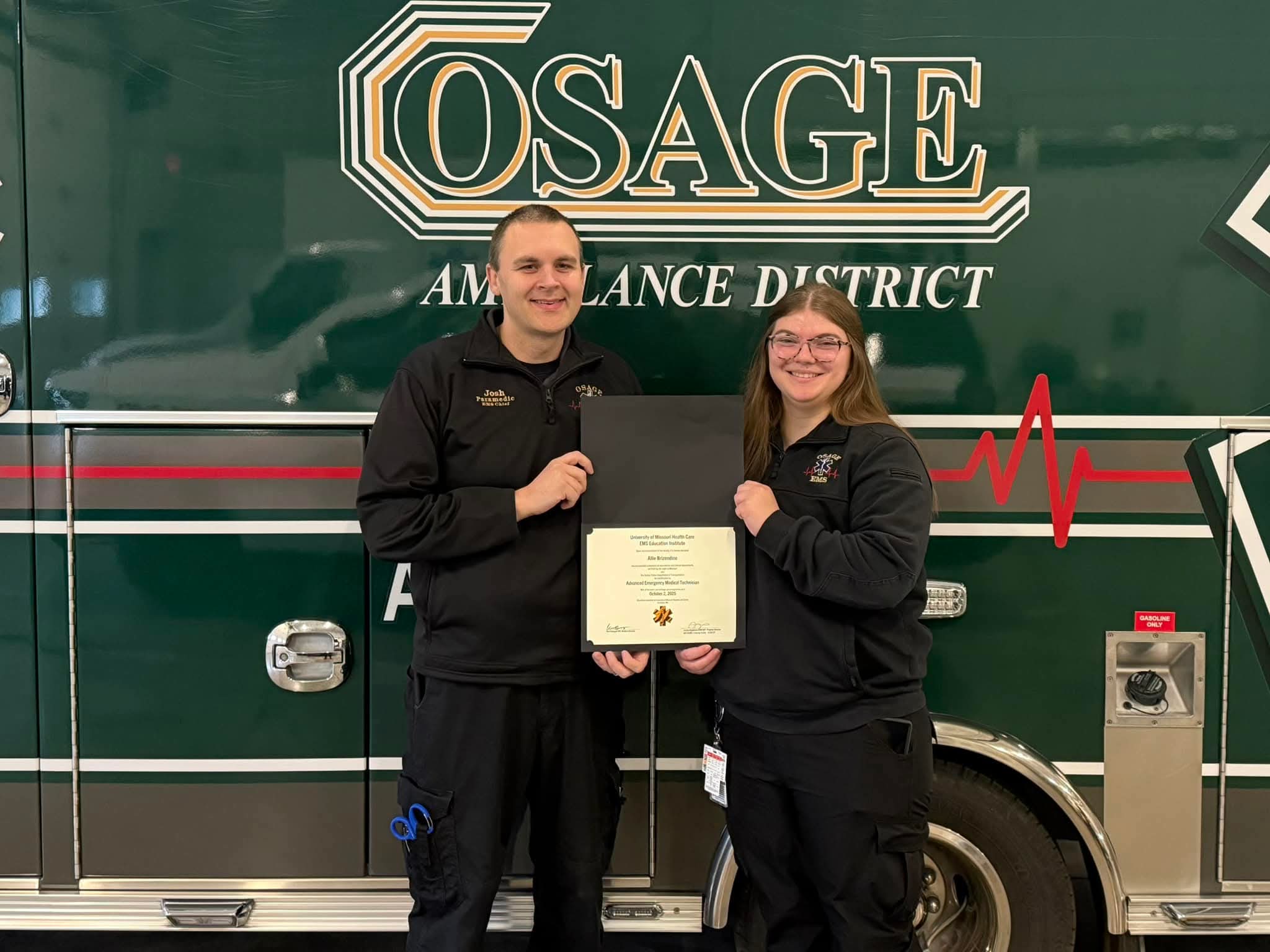
Allie Brizendine, NREMT, MO EMT-A
Osage Ambulance District | Miller County Ambulance District
For as long as I can remember, I’ve been fascinated by how the body works and what happens beneath the surface. That curiosity naturally drew me toward health care. But even more than the science, I felt called to help people — without shame, without judgment and with compassion.
From a young age, I dreamed of making a real difference. Today, I can honestly say that health care feels like home. Every patient, every challenge, and every day gives me the opportunity to keep learning and growing while impacting someone’s life in a meaningful way.
I work in Emergency Medical Services, and no two days ever look the same.
My shift usually starts by making sure our truck is fully stocked and ready. We check equipment, organize supplies and handle tasks around headquarters while we wait for calls. After that, the day can go in any direction.
Some shifts involve one or two calls. Other days, we might run eight to 10. These calls range from transporting someone from home to the hospital, hospital to hospital or hospital back home.
It’s unpredictable — and that’s part of what I love. Every call brings a different patient, a different situation and a new opportunity to help.
Without a doubt, it’s the people.
I’ve met patients from every walk of life. I’ve heard stories that have changed me forever. Some days, I’m there for one of the happiest moments in someone’s life. Other days, I’m present during one of their hardest.
There are moments when I’m holding someone’s hand. Offering a hug. Or simply walking alongside them during a difficult chapter of their health journey.
The ability to make a positive impact — even in small ways — is what keeps me passionate about this career. Sometimes it’s not just the medical care that matters most. It’s the reassurance. The smile. The reminder that they’re not alone.
Health care isn’t always easy, especially in rural communities like the ones I serve.
I am an Advanced EMT, and that role is often misunderstood or underutilized. In many areas, people aren’t fully aware of what AEMTs are trained to do. Part of my challenge has been helping educate others about our role and advocating for its importance.
In rural Missouri, transport times can range from 30 to 60 minutes. That’s a long time when someone is critically ill. Early intervention can save lives, and as an AEMT, I am often the first step toward Advanced Life Support care.
Since the COVID-19 pandemic, there has been a shortage of paramedics — especially in rural services. The AEMT role helps bridge that gap between EMT and paramedic levels when paramedics aren’t readily available. We can start IVs, administer certain medications and provide advanced patient management during extended transports.
I believe the AEMT role will continue to grow in importance. In many cases, we are the highest level of care on scene. That requires strong assessment skills, confident decision-making and a commitment to ongoing learning.
When I first started, I heard people say, “EMS is a job, not a career.”
I understand where that statement comes from. EMS can be physically demanding and emotionally heavy. Burnout is real. The work is intense.
But that’s not the full story.
EMS is built on teamwork and shared experience. I work alongside people who support one another, learn together and lean on each other during difficult calls. There are mental health and wellness resources available. There are opportunities to grow, advance and specialize.
For me, EMS is not just a job. It’s a fulfilling career that allows me to make a meaningful difference during some of the most vulnerable moments in a person’s life.
With the right support system and perspective, it’s sustainable — and incredibly rewarding.
If you’re thinking about a career in health care, I want you to remember something important:
Behind every chief complaint is a person having one of the worst days of their life.
When people call us, they are asking for help. They are trusting us in moments of fear, pain or uncertainty.
Caring is a gift. The ability to do this job is a gift. And we have the opportunity to use those gifts to create massive impacts — sometimes in ways we may never fully see.
Never underestimate the power of a smile, a hug or simply asking someone how they’re doing.
If you’re curious, compassionate and willing to grow, health care might be exactly where you’re meant to be.
For me, this career has changed my life — because of the patients, the stories and the privilege of showing up when it matters most.