Career Profiles
Finding Purpose Through Public Health: Dr. Melik Smith’s Mission to Improve Community Health
For Dr. Melik Smith, a career in health care was never simply about finding a profession — it was about answering a calling.

Career Profiles
For Dr. Melik Smith, a career in health care was never simply about finding a profession — it was about answering a calling.
Growing up in Memphis, Tenn., and St. Louis, Dr. Smith witnessed the effects of health disparities in his own community. Preventable illnesses, limited access to care and unequal health outcomes weren’t abstract concepts — they were realities affecting the people around him every day.
“Seeing people suffer from preventable diseases due to lack of access and resources ignited a fire in me,” Dr. Smith said. “I knew God was calling me to be part of the solution, not just a witness to the problem.”
Today, that purpose guides his work as director of prevention and program services at the Community Wellness Project, where he combines public health expertise with a passion for improving the health of underserved communities.
As a health administrator and epidemiologist, Dr. Smith’s work reaches far beyond spreadsheets and statistics.
He analyzes health trends, develops policy recommendations, oversees health care operations and advocates for communities facing the greatest health challenges. His work helps ensure that decisions are driven by evidence while remaining focused on the people behind the numbers.
“No two days look the same, which is what I love most,” he said.
What motivates him every day is the knowledge that his work has a direct impact on the lives of others.
“The decisions I make and the data I analyze directly affect real lives in real communities,” Dr. Smith said. “Public health is invisible when it works, and that quiet success is everything to me.”
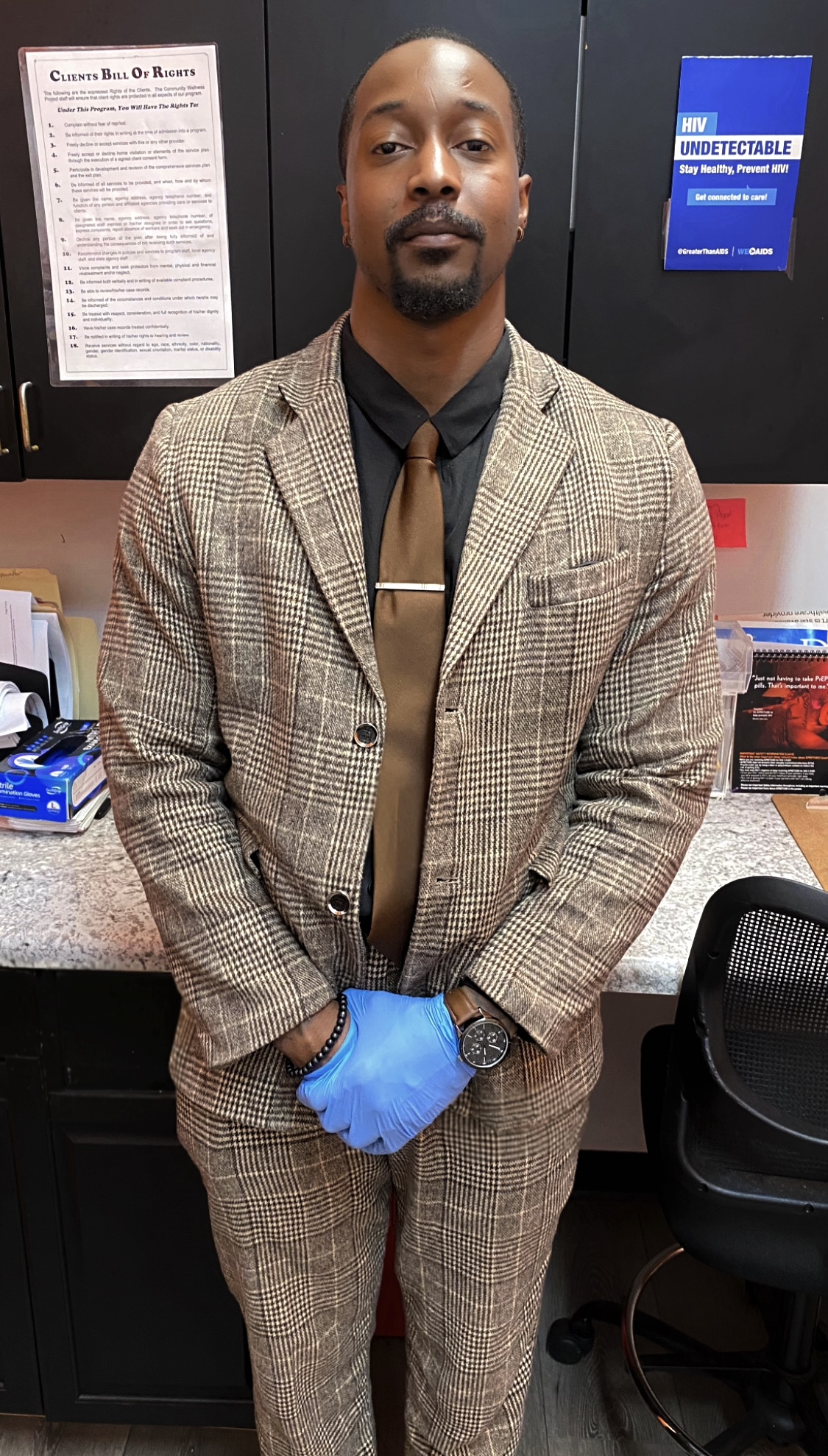
Like many health care professionals, Dr. Smith has faced obstacles throughout his career.
As a Black man pursuing advanced education and leadership roles in predominantly white academic and professional environments, he often found himself navigating spaces where few people looked like him.
Rather than allowing those experiences to define him, he leaned on his faith, sought guidance from mentors, embraced the foundation he received through his historically Black college and university education, and maintained confidence in his abilities.
“I had an unshakeable belief that I belonged in every room I entered — including Harvard,” he said.
Those experiences have strengthened his commitment to creating opportunities for others and advancing health equity through leadership.
For students considering a career in health care, Dr. Smith encourages them to focus on purpose before profession.
“Find your why before you find your path,” he said. “Health care is demanding. If you’re not rooted in purpose, the hard days will break you.”
He also emphasizes the importance of finding mentors who understand your experiences and investing in relationships that encourage personal and professional growth.
Whether through an HBCU, a university program or workplace connections, having people who believe in your potential can make all the difference.
When many people hear the word “epidemiologist,” they immediately think of infectious disease outbreaks or global pandemics.
Dr. Smith hopes to change that perception.
“Many people think epidemiology is only relevant during pandemics,” he said. “In reality, epidemiologists are working every day on chronic disease, mental health, maternal mortality and health equity issues that devastate communities long before and after any outbreak.”
By studying disease patterns and identifying opportunities for prevention, epidemiologists help communities make informed decisions that improve health outcomes every day — not just during public health emergencies.
Looking ahead, Dr. Smith believes the future of health care will be shaped by the combination of data, technology and equity.
He sees artificial intelligence and predictive analytics helping health professionals identify disease trends before they become widespread crises, creating opportunities for earlier intervention and better outcomes.
At the same time, he believes technology alone cannot solve the biggest challenges facing health care.
“The most critical evolution must happen in how we address systemic health disparities,” he said. “Communities of color, low-income populations and rural areas have been historically underserved. The future I am working toward is one where a ZIP code no longer determines health outcomes.”
He also believes health care leaders must bridge the gap between science and policy.
“We need leaders in health care administration who understand both the data and the human story behind it.”
For Dr. Smith, that vision continues to fuel the purpose that first inspired him growing up: creating healthier communities where every person has the opportunity to thrive.